PROCTER & GAMBLE
Design Research & Product Innovation for Baby Care
OVERVIEW
I collaborated with P&G on a baby care innovation project, co-leading research, concept development, and prototyping. This was my first taste of diving into the why of product design and it sparked my love of design research. I conducted in-home research, facilitated concept exploration sessions, and delivered physical prototypes of a consumer-validated concept to senior stakeholders for further refinement and validation toward commercialization.
ROLE
Design Researcher
TIMELINE
3 Months • 2023
lock

THE GOAL
Innovating for Evolving Caregiver Needs to Expand Baby Care into a New Usage Environment
The baby care market is saturated and competitive, yet shifting caregiver routines revealed an opportunity to expand into a new usage occasion.
User Need
Caregivers need baby care solutions that fit seamlessly into daily routines, reduce friction, improve delight and satisfaction, and feel relevant to their evolving lifestyles.
Business Need
The brand needs to identify and validate new product opportunities that align with consumer expectations and drive future growth.
My Role & Ownership
From discovery to delivery:
Co-leading research & prototype creation across a tight, 10-week, end-to-end sprint
SPRINT 1: exploratory research & synthesis
A Differentiation Strategy: Focusing on the emotional requirements along with the functional
[01]
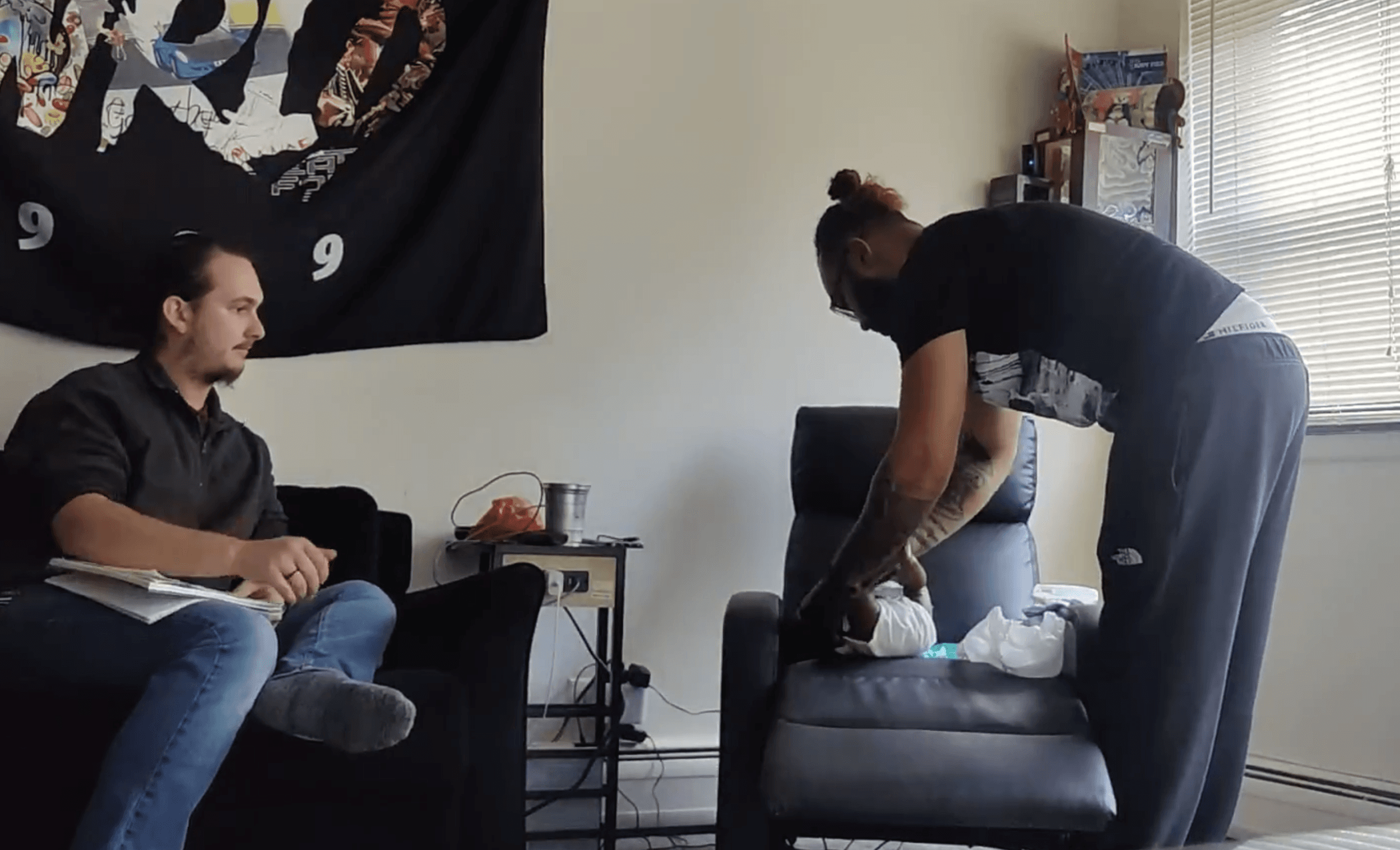
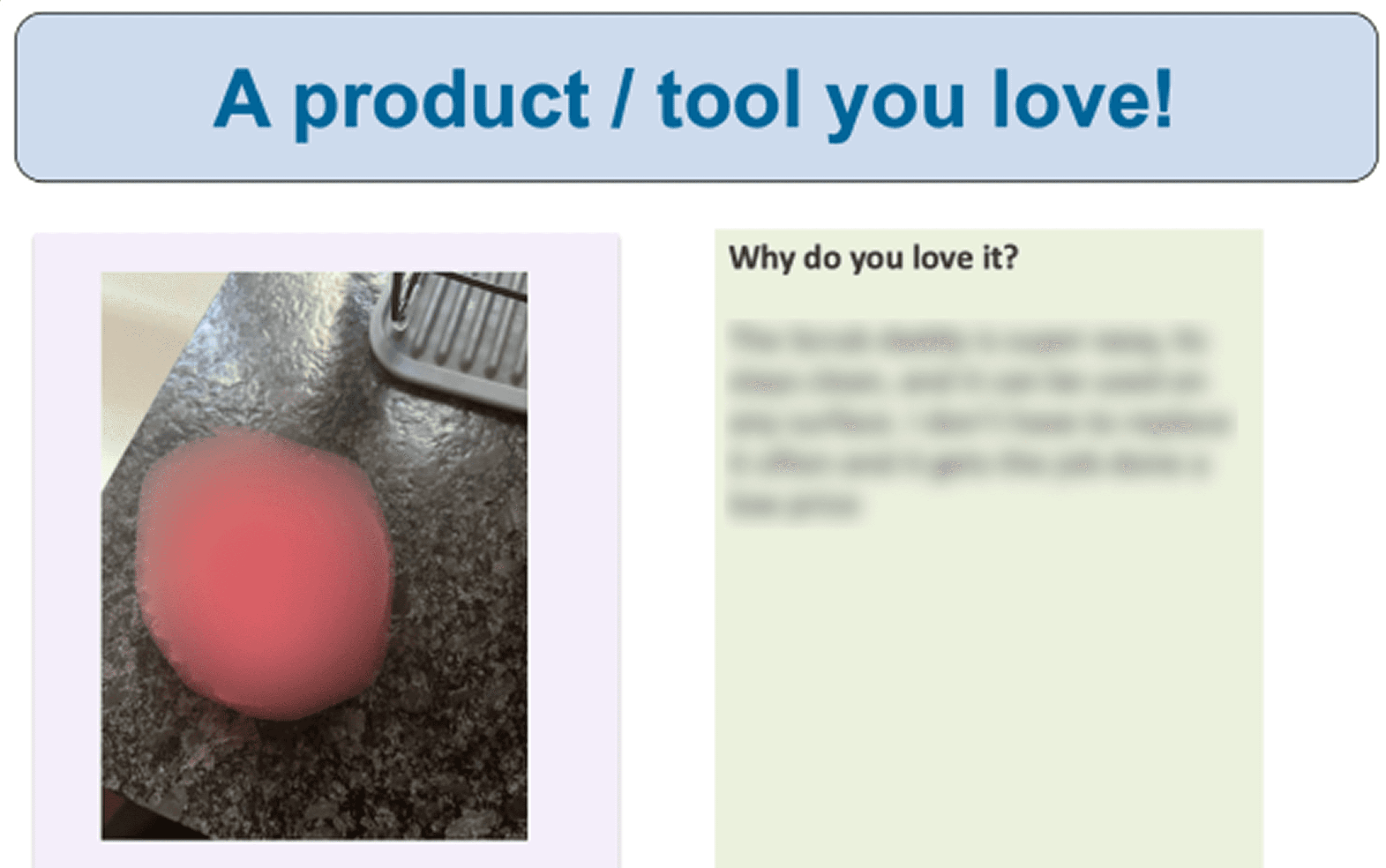
8 In-home User Interviews + Contextual Inquiries
We conducted interviews in-home to walk through how parents naturally use the product in their own environments, surfacing real behaviors and unspoken needs that wouldn't emerge elsewhere. Participants were recruited by P&G's agency.
Visual diary activities and a structured discussion guide helped deepen our understanding ahead of each session.
[02]
Affinity Mapping and Thematic Clustering for Research Synthesis
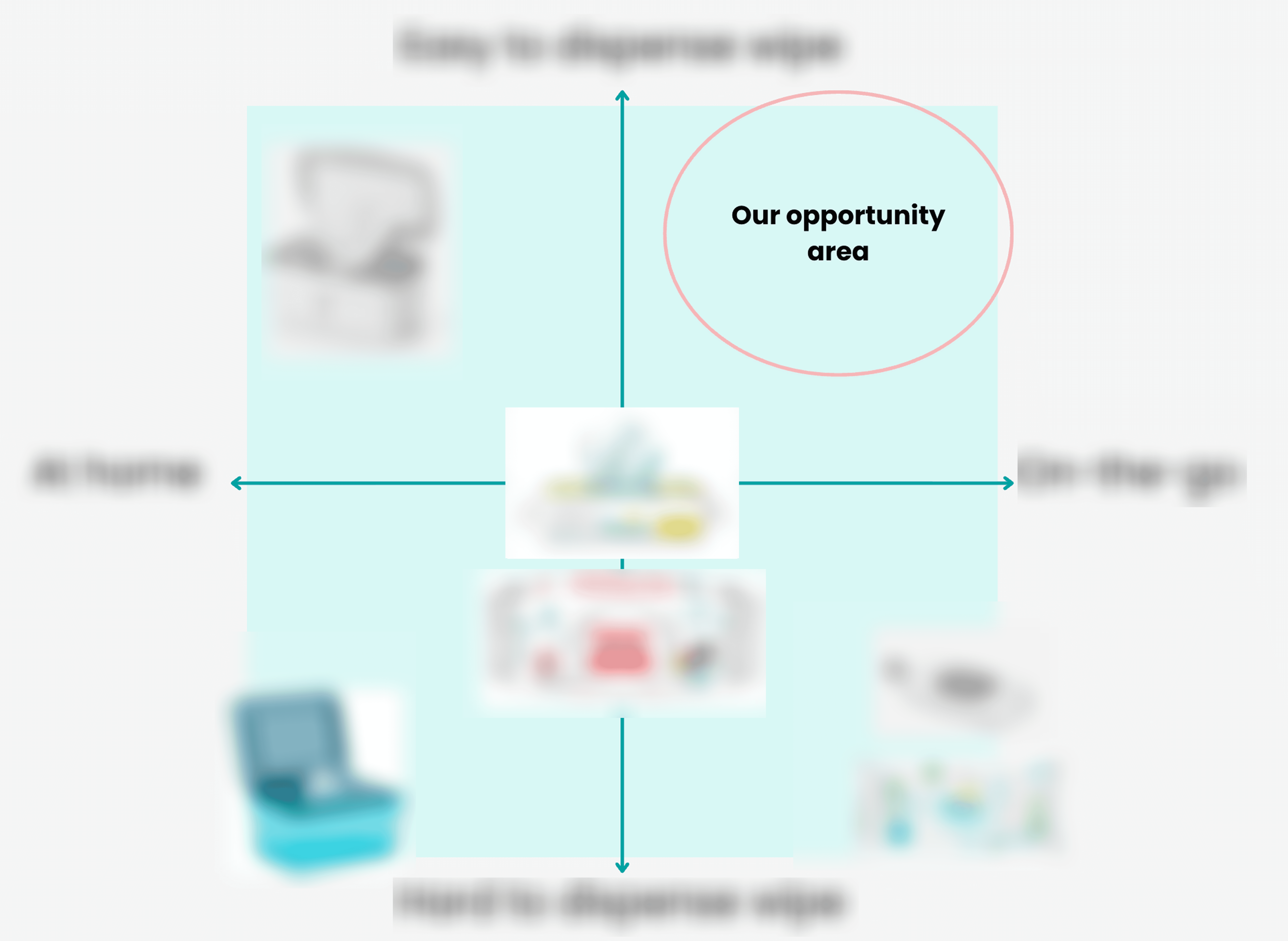
We synthesized findings through affinity mapping and thematic clustering, identifying 4 main themes and tensions in user needs. These informed our 'How Might We' statements, which guided the design direction.
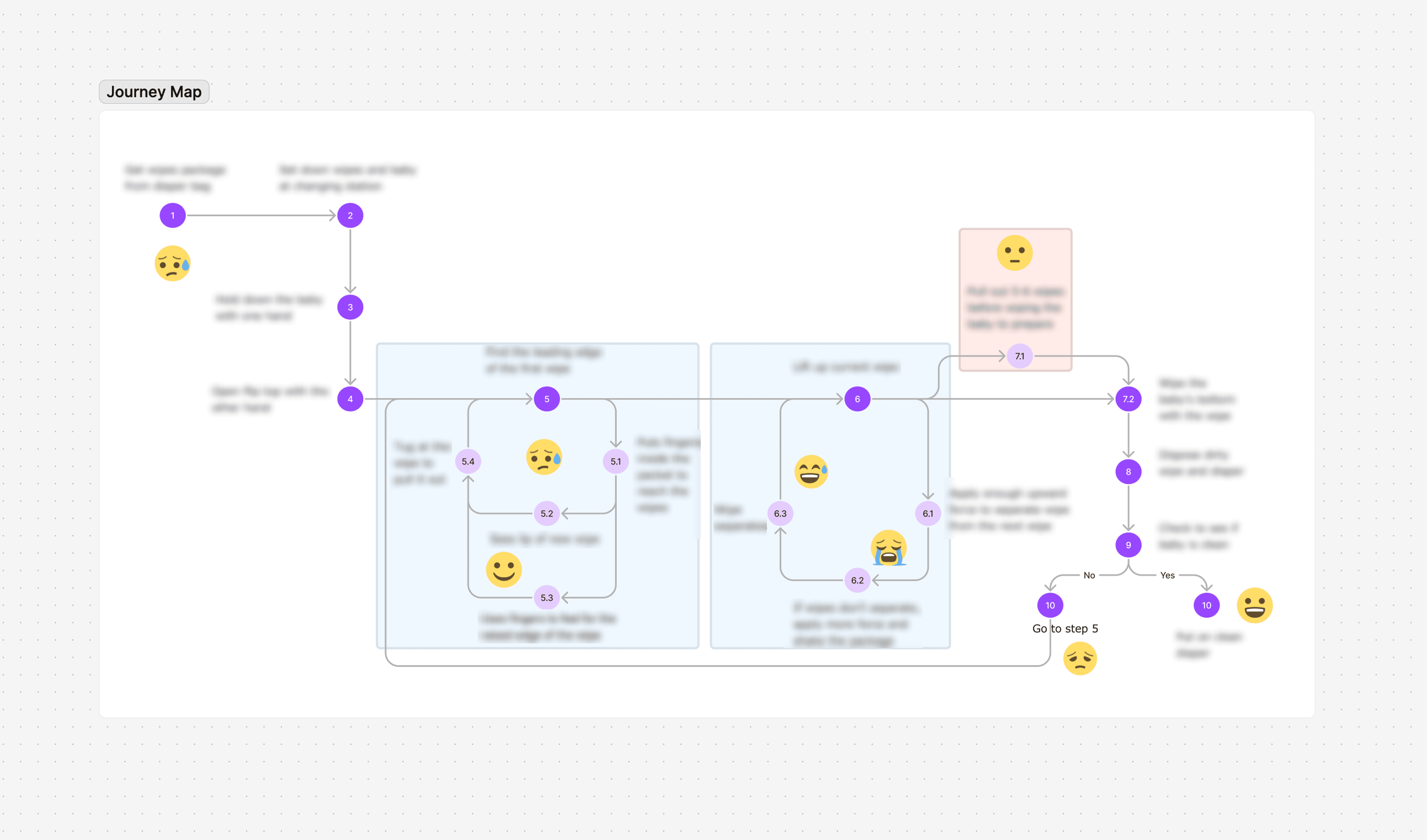
I also created a detailed journey map to pinpoint key friction points across the caregiver routine.

SPRINT 2: CONCEPT TESTING
Understanding the difference between what users say they want, vs what they actually want
[03]
Creating 15+ Wizard-of-Oz Prototypes
We constructed 15+ low-fidelity prototypes using foam core, 3d printing, cardboard, and other objects. Each focused on different aspects of research findings to find the best opportunity for innovation.

[04]
2 Rounds of In-Lab Concept Testing
I led experiment planning for 2 rounds of in-lab concept testing with 8 participants. The first round gathered feedback on concepts and potential features, helping us narrow down what resonated with users and define our direction for the second round.


SPRINT 3: REFINEMENT & PROTOTYPING
Adopting a "fail fast" approach
[05]
High Fidelity Prototyping & Testing
With a design direction established, we created multiple iterations of the same concept as high-fidelity, "looks-like" prototypes. These were 3D printed to gather feedback on look, feel, and function to inform the final product.
THE CHALLENGE
2 weeks before project delivery, we realized that going ahead with our proposed solution would significantly increase shipping costs.
PIVOTING TO ACCOUNT FOR BUSINESS CONSTRAINTS
We went back to the drawing board…
[01]
[01]
[02]
…and came up with a go-to-market strategy that:
Reduced shipping costs
Increased user autonomy
Introduced a differentiating "lock-and-key" component
IMPACT
Presented our research and idea, along with a product pitch video at the P&G HQ in Cincinnati, to get 100% stakeholder buy-in